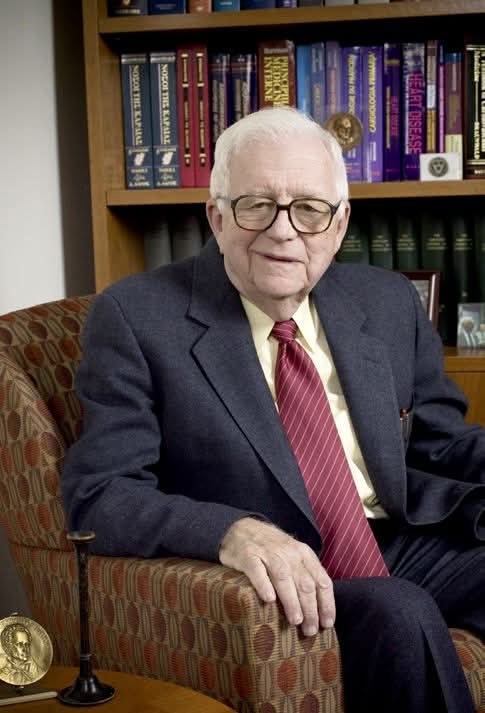
Dr. Eugene Braunwald
Cardiologist & cardiovascular research pioneer
In loving memory of Dr. Eugene Braunwald.
A life devoted to healing, a legacy that shaped modern cardiology,
and a mind that inspired generations.
Though he has passed, his impact remains in every life he touched
and every heart he helped heal.
Rest in eternal peace.
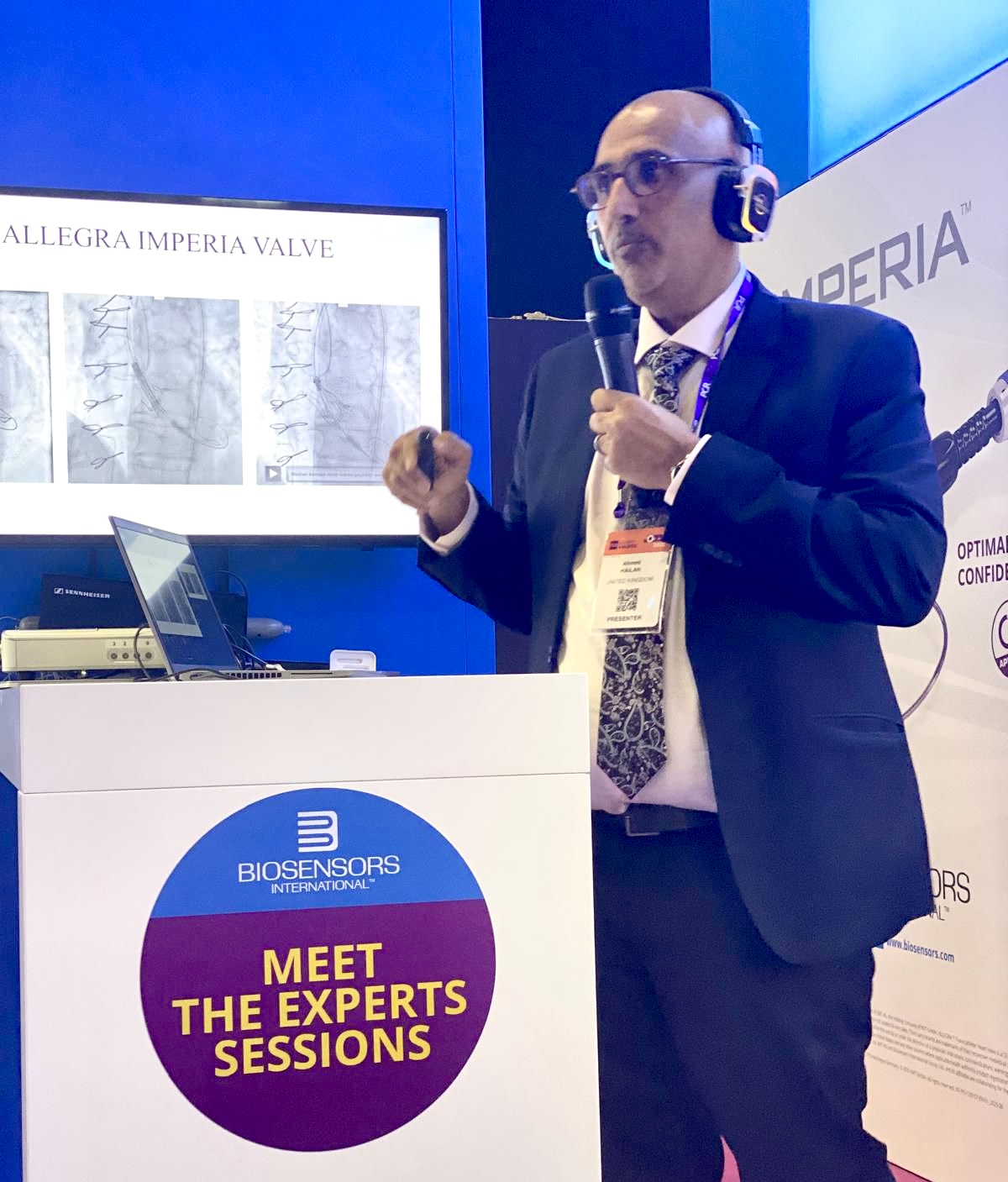
Dr Ahmed Hailan
Consultant interventional/structural cardiologist
Morriston Cardiac centre
Swansea bay university Health board
UK
MD FRCP FESC FACC
Impression on the TAVI Service in Yemen
During my recent visit to Yemen, I had the distinct honor of attending a Transcatheter Aortic Valve Implantation (TAVI) procedure at the Military Hospital. The case was meticulously discussed, thoroughly planned, and executed with remarkable precision. The level of collaboration within the multidisciplinary team was exemplary, reflecting high professional standards and strong clinical expertise.
Subsequently, I had the privilege of participating in what marked the first TAVI case performed at Al-Mutawakil Hospital in Sana’a. The procedure was conducted to an outstanding standard under the proctorship of Dr. Taha Almimony, alongside Dr. Ali Othman, the local interventional cardiologist. Notably, within just one week, a second successful case was completed in the same catheterization laboratory—an impressive achievement that demonstrates both confidence and capability.
The role of Dubai Diagnostic, led by Mr. Essam as the distributor for Meril Life Sciences, has been pivotal. Their effective management, organization, and coordination between stakeholders have significantly contributed to the success and sustainability of the program. Such structured logistical and technical support is essential for the advancement of complex structural heart interventions.
What is particularly remarkable is that this TAVI program operates within a privately funded system, supported by patients themselves, while facing substantial challenges including war-related constraints and sanctions. Despite these considerable obstacles, the team has successfully performed over 70 TAVI cases—an accomplishment that reflects dedication, resilience, and an unwavering commitment to excellence.
It is truly inspiring to witness a structural heart program in Yemen delivering TAVI services at an international standard under such demanding circumstances. This achievement is a testament to hard work, visionary leadership, and the determination to ensure that patients receive life-saving therapies regardless of external challenges.
I strongly encourage more interventional cardiologists to engage with and support this program, as expanding expertise and collaboration will undoubtedly allow more patients to benefit from advanced structural heart interventions.

Dr Abdulwali Abohasan
Consultant Interventional Cardiologist
MD, FACC, FSCAI, FESC, FEPCI
From Proof of Concept to National Strategy: Transcatheter Aortic Valve Implantation in Yemen as a Gateway to Advanced Structural Heart Interventions in Low-Resource Settings
Background and Context
Severe aortic stenosis remains a lethal yet treatable condition. Surgical aortic valve replacement (SAVR) and transcatheter aortic valve implantation (TAVI) are the only interventions proven to improve survival. Over the last two decades, TAVI has transitioned from an experimental therapy to a routine, guideline-endorsed intervention performed daily in many healthcare systems worldwide .
In Yemen, prolonged conflict, economic instability, and limited access to advanced cardiac surgery have historically excluded large segments of the population from such life-saving therapies. Despite these challenges, a locally driven TAVI program was initiated three years ago—without reliance on external missions—and has since compleed 65 cases with success rates comparable to international benchmarks.
This achievement represents not an endpoint, but a strategic inflection point.
What This Experience Has Proven
The Yemeni TAVI program has demonstrated, in real terms, that
complex structural heart interventions are feasible in low-resource environments when built on proper patient selection, minimalistic strategies, and disciplined complication avoidance.
focused Heart Team model, even within constrained infrastructure, can safely deliver outcomes aligned with global standards.
Cost barriers, while significant, are not absolute, particularly with emerging valve platforms and structured funding pathways.
Local expertise can be developed and retained, reducing dependence on outbound referrals and humanitarian exceptions. These findings directly challenge the assumption that advanced transcatheter therapies are incompatible with fragile health systems.
Why Decision Makers Must Act Now
Structural heart disease care is evolving rapidly. TAVI has already expanded from inoperable patients to intermediate- and low-risk populations globally. Transcatheter Edge-to-Edge Repair TEER and percutenous MV replacement for mitral regurgitation is following the same trajectory.
Failing to act at this stage will result in widening technology and outcome gaps between Yemen and neighboring regions, continued avoidable mortality and disability from treatable valvular disease and escalating long-term healthcare costs due to late presentations and heart failure burden. Conversely, timely policy engagement allows Yemen to leapfrog, not lag behind.
What Yemen Actually Needs
Strategic Recognition
Formal acknowledgment of TAVI and future structural heart intervention as essential tertiary cardiovascular services, not luxury procedures.
Concentration of Excellence
Rather than dispersing limited resources, policy should support: a limited number of high-volume centers, national referral pathway and mandatory outcome reporting and registries from program inception
Sustainable Financing Models
This includes: institutional and charitable co-funding, negotiated device pricing and selective adoption of cost-effective valve technologies already proven in comparable economies
Human Capital Investment
Support for advanced imaging specialists, structural intervention training, cardiac anesthesia and peri-procedural care teams.
This investment yields returns far beyond a single procedure type.
Expansion to Mitral Interventions
Yemen’s historical success with mitral balloon valvuloplasty positions it uniquely to adopt TEER technologies logically and safely, building on existing skill sets rather than starting from zero.
The Broader Vision
The Yemeni TAVI experience should be viewed as a template, not an exception—illustrating how innovation, discipline, and local ownership can overcome systemic limitations.
In a rapidly evolving cardiovascular world, the true risk is not adopting advanced therapies—but delaying their structured integration until the gap bec
Dr. A. Sharaf. MD
Cardiac consultant. Intervention.
Dear sirs,
In behalf of the Yemeni delegates to CIT 2024 held by generous invitation and sponser by MERIL life science international, I would like to thank the executive committee and admistration of MERIL for their kind hospitality, care and valuable scientific medical presentions ,cultural activities and training given to us .We will continue our relations in future for further co-operation , establishment solid introduction, programme’s and works with their innovative cardiac products in Yemen.
Best regards.
Valve-in-Valve TAVI
Sana’a, Yemen July 10,2026
When Redo Surgery Was No Longer an Option… A New Chance Through Valve-in-Valve TAVI
Some cases remind us that innovation in structural heart intervention is not simply about technology—it is about giving patients another chance when conventional treatment is no longer feasible.
Today, our Heart Team successfully treated a 43-year-old woman with a Valve-in-Valve Transcatheter Aortic Valve Implantation (ViV-TAVI) after degeneration of a 19 mm Trifecta ™️ surgical bioprosthetic aortic valve.
A Long and Difficult Journey
In 2018, the patient underwent Surgical Aortic Valve Replacement (SAVR) with a 19 mm Trifecta™️ tissue valve combined with CABG ×2.
Her postoperative course was exceptionally challenging, complicated by severe right ventricular failure requiring CentriMag RVAD, IABP, prolonged intensive care, and multiple postoperative complications before she eventually recovered.
Several years later, she developed structural degeneration of the surgical bioprosthesis, leading to progressive symptoms that significantly affected her quality of life.
Pre-procedural
echocardiography demonstrated:
Peak transvalvular gradient: 85 mmHg
Mean gradient: 51 mmHg
Degenerated surgical bioprosthesis with mild paravalvular leak.
Hemoglobin 9 g/dL, adding further complexity to her clinical condition.
When Surgery Was No Longer the Best Option
The patient and her family sought opinions from multiple experienced cardiac surgeons both inside Yemen and abroad.
Although redo surgical valve replacement had been considered, the consensus was that repeat open-heart surgery carried an unacceptably high operative risk, given:
●Previous complex cardiac surgery.
Prior CABG.
●History of severe postoperative RV failure requiring mechanical circulatory support.
Expected technical difficulty of redo sternotomy.
●With no acceptable surgical option remaining, ●the Heart Team proceeded with a comprehensive evaluation for Valve-in-Valve TAVI.
Careful Planning Was the Key
Detailed 3Mensio CT analysis
revealed several high-risk anatomical features:
Degenerated 19 mm Trifecta™️ surgical valve.
Very small annulus (Perimeter-derived diameter 17.8 mm).
Low coronary heights (LCA 7 mm, RCA 8 mm).
Narrow Sinuses of Valsalva, increasing the risk of coronary obstruction during Valve-in-Valve implantation.
These findings required meticulous procedural planning and precise execution.
Procedure
Valve-in-Valve TAVI
■Predilatation: Mammoth™️ 18 mm balloon.
■Valve implanted: Myval™️ 20 mm Transcatheter Heart Valve
The Result
The procedure was completed successfully with excellent immediate hemodynamic performance.
Before TAVI Peak Gradient: 85 mmHg Mean Gradient: 51 mmHg Immediately After TAVI
Peak Gradient: 9.5 mmHg
Mean Gradient: 5.96 mmHg
A remarkable reduction in transvalvular gradients with excellent prosthetic valve function and immediate procedural success.
This case demonstrates how meticulous CT planning, appropriate device selection, and multidisciplinary collaboration can safely expand treatment options for patients with failed small surgical bioprostheses who are no longer candidates for repeat surgery.
Acknowledgements
Our sincere appreciation goes to# Dr. Taha Ahmed Ali Saleh, Myval Proctor* , for his exceptional leadership, guidance, and unwavering support throughout this challenging case.
We also extend our heartfelt thanks to the entire Heart Team, #Modern European Hospital , and #Dubai Diagnostic for their commitment, teamwork, and dedication to advancing structural heart interventions in Yemen.
Together, we continue to bring advanced structural heart therapies to patients who once had no remaining treatment options.
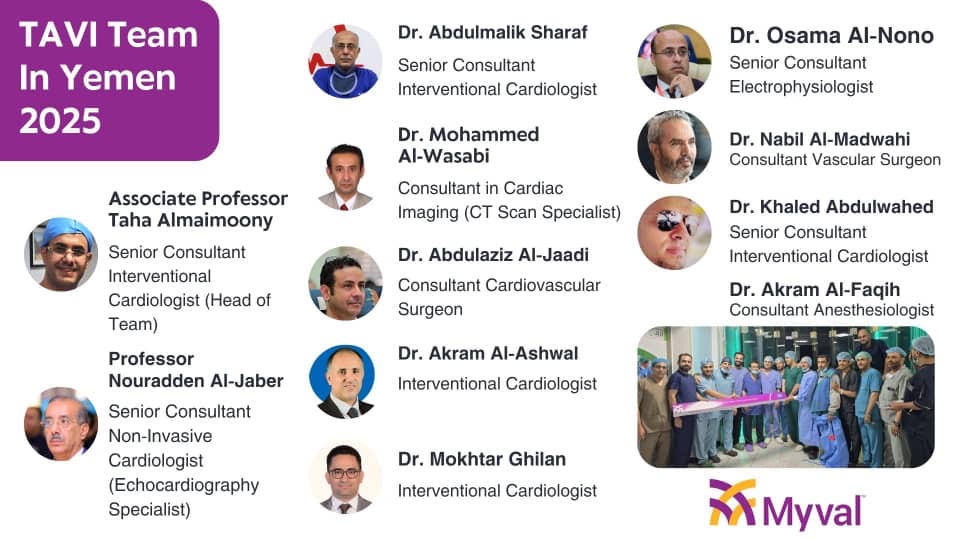
When Global Consensus Reinforces Our Vision
TAVI Team Yemen
The recent publication of “Procedural Strategies for Optimal Transcatheter Aortic Valve Replacement: An International Position Statement” in JACC: Cardiovascular Interventions represents an important milestone for the global TAVR community. The paper introduces the TAVR CODE framework, emphasizing procedural excellence through meticulous CT planning, optimal valve expansion, accurate deployment, commissural alignment, and lifetime management of TAVR patients.
We extend our sincere appreciation to all the distinguished international experts who contributed to this outstanding scientific work and continue to advance structural heart interventions for patients worldwide.
For us in Yemen, this publication has a special meaning.
Since the launch of the National TAVI Program in August 2024, under the leadership of Professor Dr. Taha Al-Maimouni, our multidisciplinary Heart Team has been committed to these same fundamental principles. From meticulous CT-based planning and appropriate valve sizing to accurate implantation, optimal valve expansion, commissural alignment whenever feasible, and a continuous focus on long-term patient outcomes, these concepts have been embedded in our program from the very beginning.
Working in one of the world’s most challenging healthcare environments has never changed our commitment to delivering care according to the highest international standards. Seeing these principles formally consolidated in a JACC International Position Statement reinforces our confidence that our program has been progressing in the right direction since its inception.
We also express our sincere gratitude to Meril Life Sciences for its continuous scientific and educational support, and to the Myval Transcatheter Heart Valve platform, which has been an integral part of our National TAVI Program from day one. This collaboration has enabled our team to translate internationally recognized procedural principles into daily clinical practice for the benefit of our patients.
This is not about claiming priority; it is about sharing the same vision as the world’s leading structural heart specialists—a vision centered on procedural excellence, evidence-based medicine, continuous learning, and achieving the best possible outcomes for every patient.
We remain committed to advancing structural heart care in Yemen through science, collaboration, and dedication.
Read the JACC Position Statement: “JACC: Procedural Strategies for Optimal Transcatheter Aortic Valve Replacement” (https://reference-url-citation.invalid/1)